Mid century modern wall art can transform a living room without requiring a complete redesign. Warm color palettes, geometric shapes, abstract compositions and retro-inspired artwork can introduce the character of 1950s, 1960s and 1970s design while still feeling natural in a contemporary home.
The most successful mid century interiors usually avoid filling every wall. Instead, artwork is given enough space to become part of the architecture of the room and create a clear visual focal point.
What Is Mid Century Modern Wall Art?
Mid century modern wall art is inspired by the visual language of postwar modern design. Common elements include geometric forms, organic shapes, architectural compositions, simplified illustrations and bold but controlled color.
Typical colors include burnt orange, mustard yellow, olive green, warm brown, beige, black and muted red. These tones work especially well with walnut furniture, natural wood, neutral upholstery and simple architectural lines.
1. Use One Large Statement Artwork
A single large artwork can become the main visual anchor in a living room.
This approach works particularly well above a sofa, sideboard, console or reading area. Choose artwork with enough contrast to stand out from the wall while still sharing colors with furniture, textiles or decorative objects elsewhere in the room.
Large geometric or abstract pieces are especially effective when the surrounding furniture has clean lines and a restrained palette.
2. Build a Small Retro Gallery Wall
A gallery wall does not need to contain ten or fifteen pieces. Three to five coordinated artworks are often enough to create a strong composition.
A mid century gallery wall can combine geometric abstract posters, Bauhaus-inspired compositions, retro interiors, botanical forms and architectural artwork.
The most important principle is visual connection. Repeating colors, shapes or design periods across several pieces helps the wall feel intentional rather than random.
3. Combine Burnt Orange with Neutral Interiors
Burnt orange is one of the colors most strongly associated with mid century design.
It works particularly well with warm white walls, beige upholstery, walnut furniture, black lighting and muted green accents.
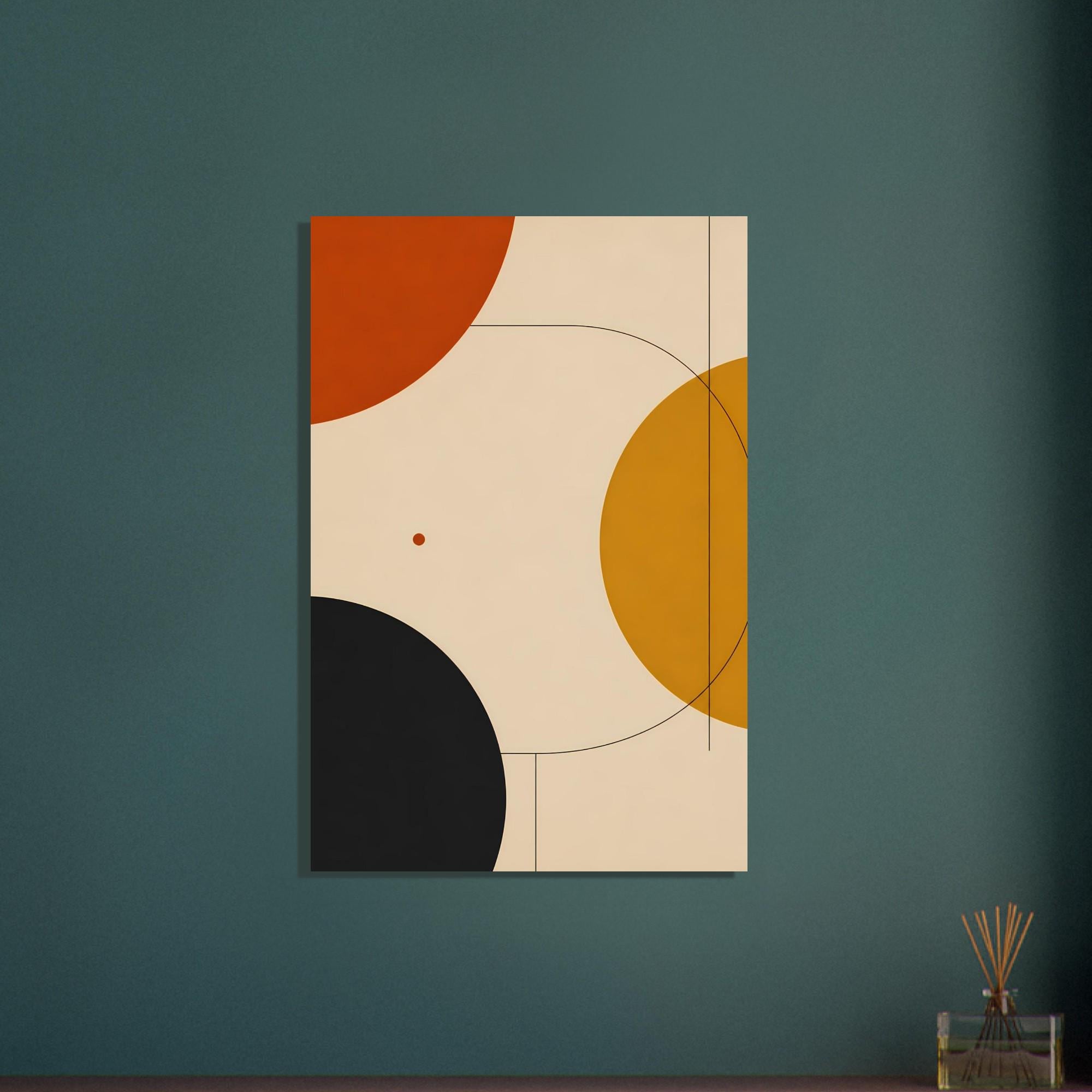
An orange geometric poster can introduce a clear retro reference without turning the entire room into a themed interior. This makes it a useful choice for homes that mix modern furniture with vintage-inspired details.
4. Add Bauhaus-Inspired Geometry
Bauhaus and mid century modern aesthetics work naturally together in contemporary interiors.
Circles, arches, grids and abstract geometric shapes introduce visual structure and can provide contrast in rooms with simple furniture.
Black, orange, mustard, red and neutral combinations are particularly effective when you want artwork to become a stronger graphic element within the room.
5. Use Artwork to Connect Colors Across the Room
Wall art can act as a bridge between different colors already present in an interior.
For example, an artwork containing beige, orange, black and olive can visually connect a beige sofa, walnut furniture, black lighting and green cushions.
This creates a more cohesive room without requiring furniture, textiles and accessories to match perfectly.
6. Consider Retro Interior Artwork
Not all mid century artwork needs to be abstract.
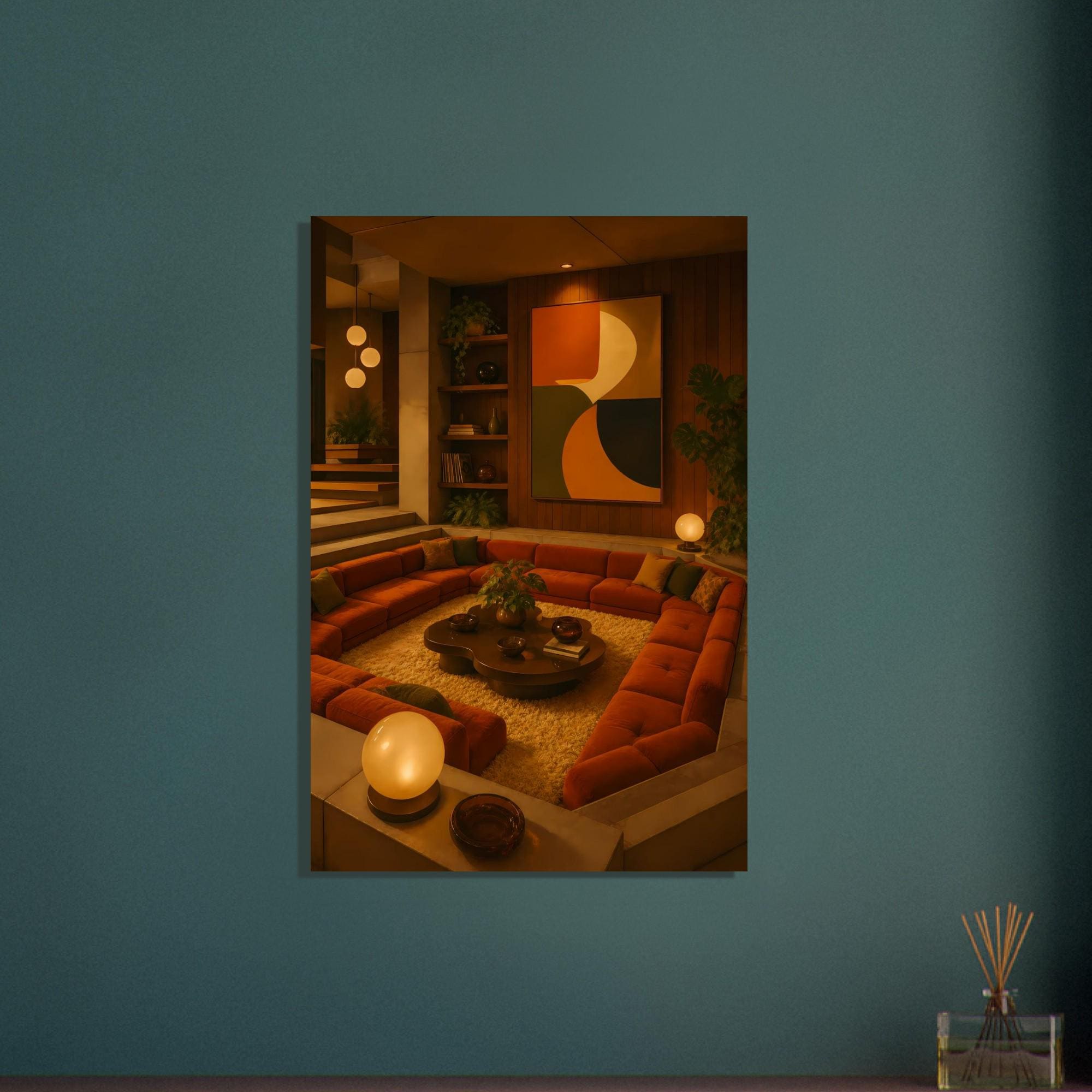
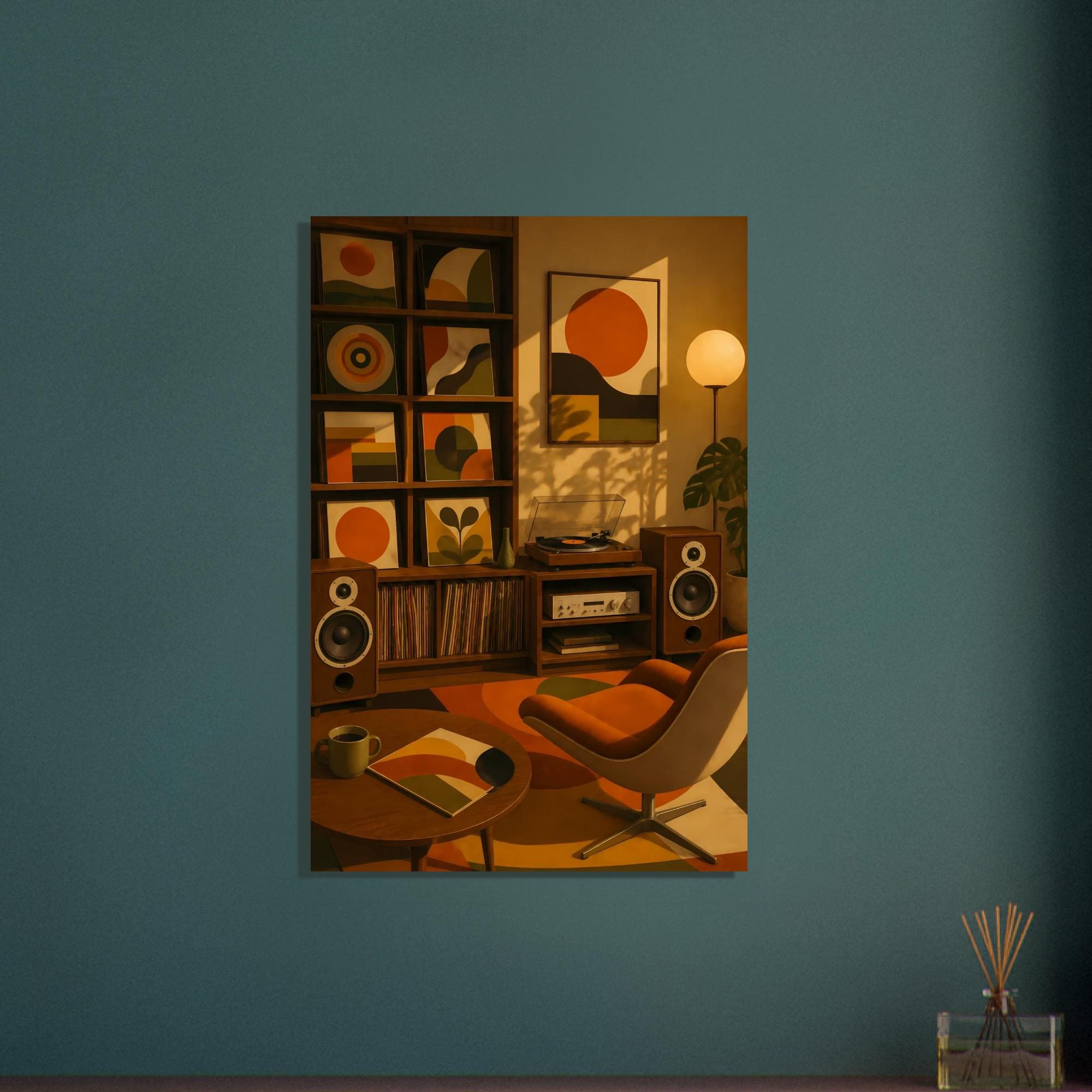
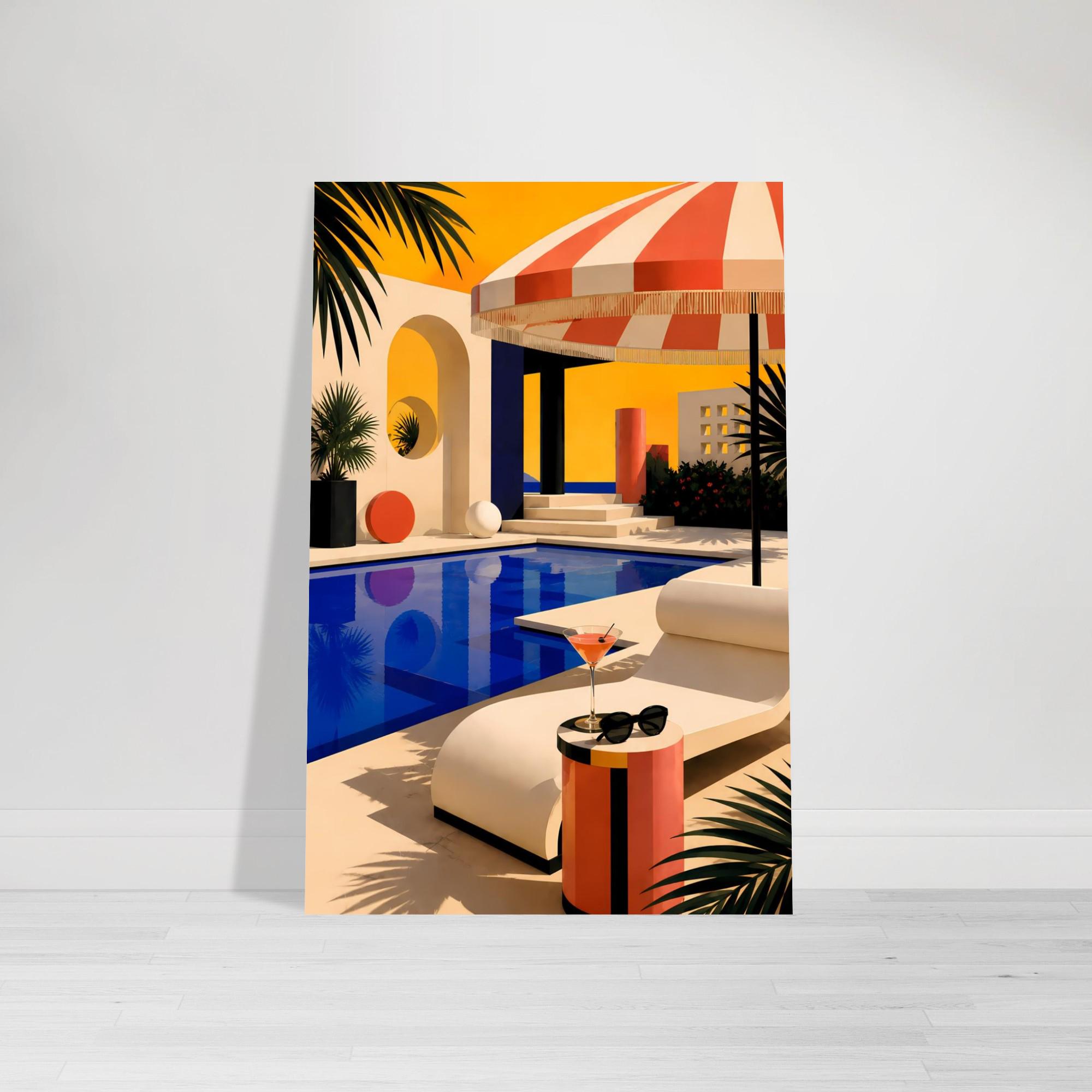
Illustrations of conversation pits, lounges, swimming pools, desert motels and retro architecture can introduce both atmosphere and design history into a room.
These pieces are particularly effective in living rooms because they reinforce the idea of the room as a social space while adding a strong sense of place and period.
7. Leave Enough Space Around the Artwork
One of the easiest styling mistakes is placing too many decorative elements around wall art.
Mid century interiors often benefit from visual breathing room. Allow the artwork to have a clear relationship with the furniture beneath it instead of surrounding it with unnecessary wall decorations.
Negative space can make a single artwork feel larger, more intentional and more valuable within the composition of the room.
How High Should Wall Art Be Above a Sofa?
A useful starting point is to position the bottom of the artwork approximately 6 to 10 inches above the top of the sofa.
The exact position depends on ceiling height, artwork size and furniture proportions.
The goal is for the artwork and sofa to read as one visual composition rather than two unrelated objects.
What Size Wall Art Works Best in a Living Room?
Large blank walls usually benefit from either one substantial artwork or a coordinated group of smaller pieces.
Above a sofa, artwork that visually occupies roughly two-thirds of the sofa width often creates a balanced result.
Smaller prints can work well when grouped into a gallery wall, especially when spacing between the frames remains consistent.
Which Colors Work Best for Mid Century Modern Wall Art?
Burnt orange, mustard yellow, olive green, terracotta, beige, brown and black are reliable choices for a classic mid century look.
For a softer contemporary interpretation, use neutral beige, muted terracotta and olive.
For a stronger graphic statement, combine orange, black and cream or introduce Bauhaus-inspired primary colors in a controlled way.
Can Mid Century Modern Art Work in a Contemporary Home?
Yes. Mid century artwork does not require a fully vintage interior.
A single geometric poster, retro architectural print or warm abstract artwork can introduce mid century character into a contemporary room without changing the furniture or overall design style.
The most successful combinations usually share at least one visual element, such as color, material, proportion or shape.
Choosing Mid Century Modern Artwork for Your Space
Start with the mood you want the room to create.
For a warmer retro interior, consider burnt orange, mustard and brown. For a calmer contemporary interpretation, choose beige, black, olive and muted terracotta. For a stronger graphic statement, look toward Bauhaus-inspired geometric artwork.
Voche Gallery curates wall art across mid century modern, Bauhaus, abstract, botanical and travel-inspired styles, allowing related pieces to be combined across different collections while maintaining a consistent visual language.
Explore Voche Gallery's Mid Century Modern Wall Art collection to discover artwork designed for living rooms, bedrooms, offices and other expressive interiors.