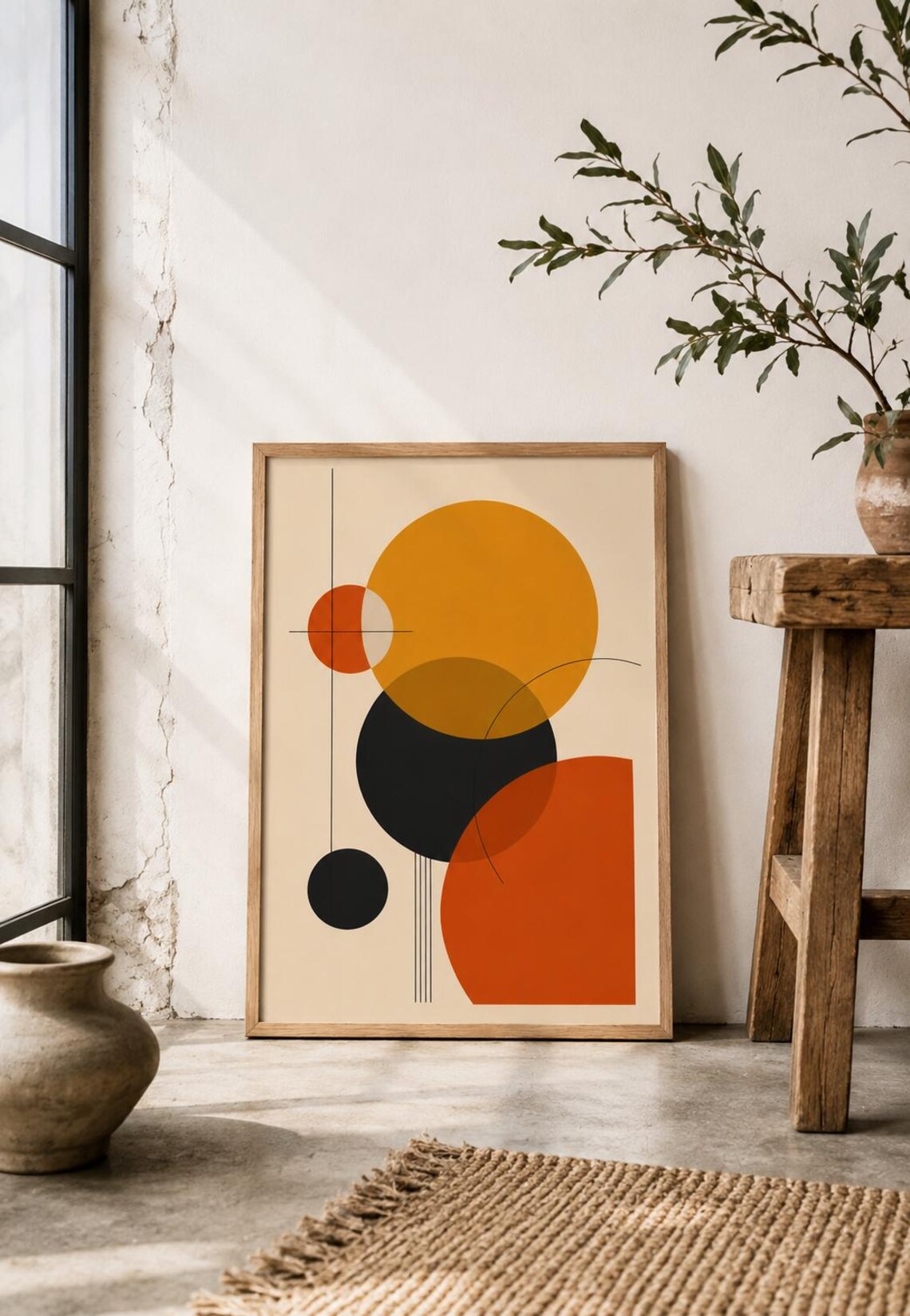
The wall above your sofa is one of the most important decorating opportunities in your living room. Whether you have a compact apartment sofa, a long sectional, or a classic three-seat couch, the right artwork can make the entire seating area feel more balanced, inviting, and intentional.
Choosing wall art above a sofa involves more than finding a beautiful poster. The size of the artwork, its relationship to the furniture, the colors in your room, and the arrangement you choose all influence the final result.
From oversized abstract prints to coordinated gallery walls, these above-sofa wall art ideas will help you turn an empty wall into a focal point that complements your living space.
1. Choose One Large Statement Artwork Above Your Sofa
A single large artwork is one of the simplest ways to decorate the wall above a couch.
Instead of arranging several smaller pieces, one substantial print creates a clear focal point. This approach works particularly well in modern, minimalist, and contemporary living rooms where a clean composition is part of the overall design.
Abstract Wall Art is an especially versatile choice. Organic shapes, geometric compositions, and expressive colors can add visual interest without introducing too many competing decorative elements.
For a warm, modern interior, consider artwork featuring terracotta, burnt orange, olive green, beige, or brown. These colors can work naturally with cream upholstery, walnut furniture, and neutral rugs.
The key is proportion. A statement piece should have enough visual presence to relate to the width of the sofa without making the wall feel crowded.
2. Create a Balanced Pair of Wall Art Prints
Two coordinated prints can create a structured, symmetrical appearance above a sofa.
This arrangement works particularly well when your living room already has balanced furniture placement, such as matching side tables or lamps on either side of the couch.
The prints do not need to be identical.
You might combine two geometric compositions, two botanical designs, or a pair of abstract landscapes that share a similar color palette.
Mid Century Modern Wall Art can work beautifully in paired arrangements because geometric forms, organic shapes, and retro colors often create natural visual connections.
To keep the arrangement cohesive, consider using matching frame finishes and maintaining consistent spacing between the prints.
3. Style Three Coordinated Posters Above a Couch
A three-piece arrangement is a useful option for a long sofa or a wide, uninterrupted wall.
Three vertical posters can create a balanced composition while allowing each artwork to contribute something different.
For example, a coordinated arrangement might include:
- One bold geometric print
- One organic abstract composition
- One minimalist landscape
- A shared palette of cream, terracotta, olive, and brown
The artworks do not have to depict the same subject. Consistent colors, proportions, or framing can make the group feel intentional.
When arranging three pieces, keep the spacing relatively even and consider the total width of the entire group rather than measuring each print separately.
4. Use Bauhaus Wall Art for a Graphic Focal Point
If your living room needs stronger visual structure, Bauhaus Wall Art can make the wall above your sofa feel more dynamic.
Bauhaus-inspired designs often use circles, arches, geometric blocks, and bold color relationships.
These elements work especially well with contemporary furniture, clean-lined sofas, natural wood, and modern lighting.
A graphic poster featuring black, cream, orange, or primary colors can create contrast against a neutral wall.
For a more coordinated arrangement, combine two geometric prints with related colors but different compositions.
This creates visual variety without making the wall feel disorganized.
5. Add Warmth With Earth-Tone Wall Art
Earth-tone artwork can make the seating area feel more comfortable and visually connected.
Colors such as sand, rust, terracotta, caramel, muted green, and warm brown complement many popular sofa colors, including cream, beige, taupe, charcoal, and natural linen.
Abstract landscapes, desert-inspired compositions, and organic geometric prints are useful options.
If your sofa is light-colored, deeper earth tones can provide contrast. If your sofa is dark, artwork featuring cream or lighter neutrals can help brighten the wall.
The result can feel warm and sophisticated without relying on excessive decorative accessories.
6. Create a Gallery Wall Above Your Sofa
A gallery wall is a good choice when you want the space above your sofa to feel collected and personal.
Rather than relying on one large piece, you can combine several prints into a larger arrangement.
A successful gallery wall usually has a connecting element, even when the individual artworks are different.
Consider combining:
- Abstract and geometric artwork
- Botanical and nature-inspired prints
- Vintage-inspired posters
- Neutral landscapes
- Coordinated retro designs
You can maintain consistency through frame colors, recurring tones, or similar spacing.
Before hanging anything, arrange the prints on the floor or create paper templates to test the layout on your wall.
This allows you to evaluate the overall composition before making permanent changes.
7. Try Botanical Wall Art for a Softer Living Room
Botanical Wall Art can soften the appearance of a living room dominated by straight furniture lines, modern shelving, or hard architectural surfaces.
Leaves, flowers, and organic forms introduce a natural visual rhythm.
Botanical artwork works particularly well with neutral upholstery, wooden furniture, woven textiles, and soft lighting.
For a contemporary room, consider simplified botanical compositions rather than highly detailed traditional illustrations.
A pair of botanical prints can create a calm, balanced arrangement above the sofa, while one larger botanical artwork can become a subtle statement piece.
8. Use Scandinavian Wall Art for a Calm, Minimal Look
Scandinavian Wall Art is well suited to living rooms that emphasize simplicity, natural materials, and comfortable minimalism.
Muted colors, understated shapes, soft landscapes, and delicate botanical designs can complement light-colored sofas and pale wood furniture.
Rather than filling every section of the wall, allow the artwork some breathing room.
A carefully selected print or coordinated pair can make the space feel finished without overwhelming it.
This approach is particularly effective in smaller living rooms where too many decorative elements can make the space feel visually busy.
9. Make a Statement With Retro and Mid Century Artwork
Retro-inspired artwork can bring personality to a neutral seating area.
Warm orange, mustard yellow, olive green, burgundy, and cream can create a nostalgic atmosphere that still works with modern furniture.
Mid century modern posters are particularly effective when paired with walnut furniture, sculptural lamps, and simple upholstery.
You can choose one expressive print or combine several designs with a related vintage-inspired palette.
The artwork does not need to match the age or style of every piece of furniture. A modern sofa can work beautifully with retro artwork when the colors and proportions feel balanced.
10. Choose Art Deco Wall Art for an Elegant Living Room
Art Deco Wall Art can introduce a more dramatic and decorative character above a sofa.
Geometric patterns, architectural forms, rich colors, and symmetrical compositions work particularly well in interiors with velvet upholstery, dark furniture, metallic accents, or statement lighting.
For a modern interpretation, choose artwork with a restrained palette rather than combining too many strong decorative elements.
One carefully chosen Art Deco-inspired print can create an elegant focal point without requiring an entire room to follow the same style.
How Wide Should Wall Art Be Above a Sofa?
A commonly used decorating guideline is to aim for artwork or a grouped arrangement measuring approximately two-thirds to three-quarters of the sofa's width.
This is a starting point rather than a strict rule.
A smaller composition may work when the surrounding wall contains other architectural or decorative features.
If the wall is unusually large, a wider arrangement may create better balance.
Use painter's tape to outline possible dimensions before choosing your final artwork.
How High Should You Hang Art Above a Couch?
For many living rooms, leaving approximately 6–10 inches between the top of the sofa and the bottom of the artwork or frame is a useful starting point.
The ideal distance depends on the sofa's back height, ceiling height, artwork dimensions, and surrounding furniture.
The goal is to make the artwork feel visually connected to the sofa rather than floating too high above it.
Also consider practical clearance. Avoid positioning artwork where people may regularly lean against it or accidentally make contact with the frame.
When hanging several prints, treat the group as one composition and align the arrangement relative to the sofa.
Should Wall Art Be Centered Over the Sofa or the Wall?
In most cases, center the artwork over the sofa rather than the entire wall.
This helps the artwork feel connected to the furniture below it.
For example, if your sofa sits slightly off-center because of a doorway, window, or room layout, centering the artwork over the wall could make the arrangement feel disconnected from the seating area.
However, asymmetrical layouts can also work.
A large sectional sofa, nearby floor lamp, or substantial side table may influence the visual balance of the composition.
Evaluate the entire seating area rather than relying only on the wall's measurements.
What Wall Art Looks Best Above a Sectional Sofa?
Sectional sofas often create a wider or more visually complex seating arrangement than traditional couches.
For a long sectional, one large statement artwork or a coordinated group of prints can create a focal point.
For an L-shaped sectional, consider the main wall behind the longest section of the sofa.
You do not necessarily need to fill every wall above the sectional.
In some rooms, artwork on one wall and a floor lamp, plant, or shelving arrangement on another creates a more balanced result.
If you choose multiple prints, evaluate the composition from the main viewing positions in the room.
What Colors Work Best Above a Beige, Gray, or White Sofa?
The color of your sofa can help guide your artwork selection.
Above a beige or cream sofa, terracotta, olive green, burnt orange, brown, and black can introduce contrast while maintaining warmth.
Above a gray sofa, consider artwork featuring warm neutrals, muted blues, earthy greens, or geometric compositions that connect with other accents in the room.
Above a white sofa, both subtle and expressive artwork can work. Neutral abstract designs create a restrained look, while colorful retro or geometric posters can become a stronger focal point.
For darker sofas, artwork containing cream, beige, warm white, or brighter accent colors can help the wall feel lighter.
The best choice also depends on the wall color, flooring, rugs, and surrounding furniture.
Should You Choose Framed Posters or Canvas Above the Sofa?
Both posters and canvas artwork can work well above a couch.
Posters offer flexibility in frame selection, allowing you to coordinate the artwork with the room's furniture and decorative details.
Matching frames can also help a pair or gallery wall feel more cohesive.
Canvas artwork creates a different presentation and can work well when you prefer a more continuous artwork surface.
The right choice depends on the individual design, available product formats, and the overall look you want.
Always review the specific product listing for current size, format, and framing information before purchasing.
Common Mistakes to Avoid When Decorating Above a Sofa?
One common mistake is choosing artwork that is too small for the sofa.
Another is hanging the artwork so high that it feels disconnected from the furniture.
Using too many unrelated prints can also make the arrangement feel busy, particularly when the room already contains several patterns or strong colors.
Avoid selecting artwork based only on matching colors. The subject, composition, and overall mood should also feel appropriate for the room.
Finally, consider the physical placement of the artwork. Secure hanging hardware and suitable clearance are especially important above seating areas.
Where Can You Find Wall Art for Above the Sofa?
Voche Gallery offers curated wall art across modern, retro, geometric, botanical, and design-inspired styles.
For a warm and expressive living room, explore Mid Century Modern Wall Art and Bauhaus Wall Art.
For a softer or more contemporary look, consider Abstract Wall Art, Botanical Wall Art, and Scandinavian Wall Art.
If your room needs a more decorative statement, Art Deco Wall Art offers another direction.
Browse the related artwork featured below this guide to explore designs that may suit your sofa, furniture, and color palette.
Each Voche Gallery product page provides a closer look at the artwork and connects to its original Etsy listing, where current purchasing options can be reviewed.
Final Thoughts on Choosing Wall Art Above Your Sofa?
The best wall art above a sofa creates a natural relationship between the artwork, furniture, and surrounding room.
Start with the width of your sofa, consider whether you prefer one statement piece or several coordinated prints, and choose colors that complement the atmosphere you want to create.
Whether your style is mid century modern, abstract, botanical, Scandinavian, or Art Deco, the right artwork can make the wall above your sofa feel like an intentional part of your living room rather than an empty space waiting to be filled.